8 Surprising Truths About Motorola's 2026 Razr Phones – What Actually Changed?
Motorola's 2026 Razr lineup is here, and if you're expecting a revolution, you might be disappointed. The company has refreshed all three clamshell foldables — the standard Razr, Razr+, and Razr Ultra — but the changes are more evolutionary than revolutionary. In fact, the biggest difference is the price tag. For anyone who loved last year's models, that's not necessarily a bad thing: the 2025 Razrs were fantastic devices. But if you're wondering whether it's worth upgrading or buying new, you need to know what actually changed. Here are eight key facts to help you decide.
1. The Price Hike is Real (and Significant)
Motorola has increased prices across the entire 2026 Razr range. The standard Razr now starts at $799 (up from $699), the Razr+ jumps to $999 (from $899), and the premium Razr Ultra reaches $1,199 (previously $1,099). That’s a $100 increase per model. While Motorola cites improved components and inflation, the core hardware hasn't changed much, making the price bump feel steep. If you're on a budget, last year's models — which are still excellent — may be a smarter buy.
2. The External Display Stays the Same Size
One of the Razr's biggest selling points is its cover screen, and for 2026, it hasn't grown. The standard Razr still offers a 3.6-inch external display, the Razr+ keeps its 4.0-inch panel, and the Razr Ultra retains the same 4.3-inch screen. Motorola has tweaked the software to add more widget options and improved third-party app support, but the physical dimensions are identical. If you were hoping for a larger canvas, you'll need to wait for next year.
3. The Internal Display is Unchanged
When you unfold the Razr, you're greeted by the same 6.9-inch pOLED screen with a 120Hz refresh rate and HDR10+ support. No resolution increase, no new under-display camera tech, and no brighter peak brightness. The crease is still visible but manageable. Motorola claims the hinge is slightly more durable, but the display itself is a direct carryover from 2025. For most users, that's fine — the screen was already excellent — but it's not a reason to upgrade.
4. The Processor Gets a Modest Bump
Under the hood, the 2026 Razr series swaps the Snapdragon 8 Gen 3 for the Snapdragon 8 Gen 4 (or equivalent MediaTek Dimensity in some regions). This provides a 10–15% performance improvement in CPU and GPU tasks. For gaming and heavy multitasking, that's a nice boost, but everyday tasks like social media, messaging, and video streaming feel identical to the outgoing models. The real-world difference is minimal, especially if you're coming from a 2025 phone.
5. Camera Hardware is a Carbon Copy
Motorola has not upgraded the camera sensors. The standard Razr still has a 50MP main + 13MP ultrawide, the Razr+ adds a 12MP telephoto, and the Razr Ultra packs a 50MP main + 50MP ultrawide + 12MP telephoto. The selfie camera remains 32MP on all models. Software processing has been tweaked slightly for better low-light performance and portrait edge detection, but if you already own a 2025 Razr, you won't notice a difference in photo quality.

6. Battery Capacity and Charging Are Identical
Battery sizes haven't changed: the Razr and Razr+ both have 4,000mAh cells, while the Razr Ultra gets 4,200mAh. Charging speeds stay at 30W wired and 15W wireless for the standard models, with the Ultra supporting 45W wired. Motorola says they've optimized software for better standby time, but in real-world use, endurance is about the same as last year. If you were hoping for a battery that lasts past a full day of heavy use, that dream hasn't come true yet.
7. New Colors and Slight Weight Reduction
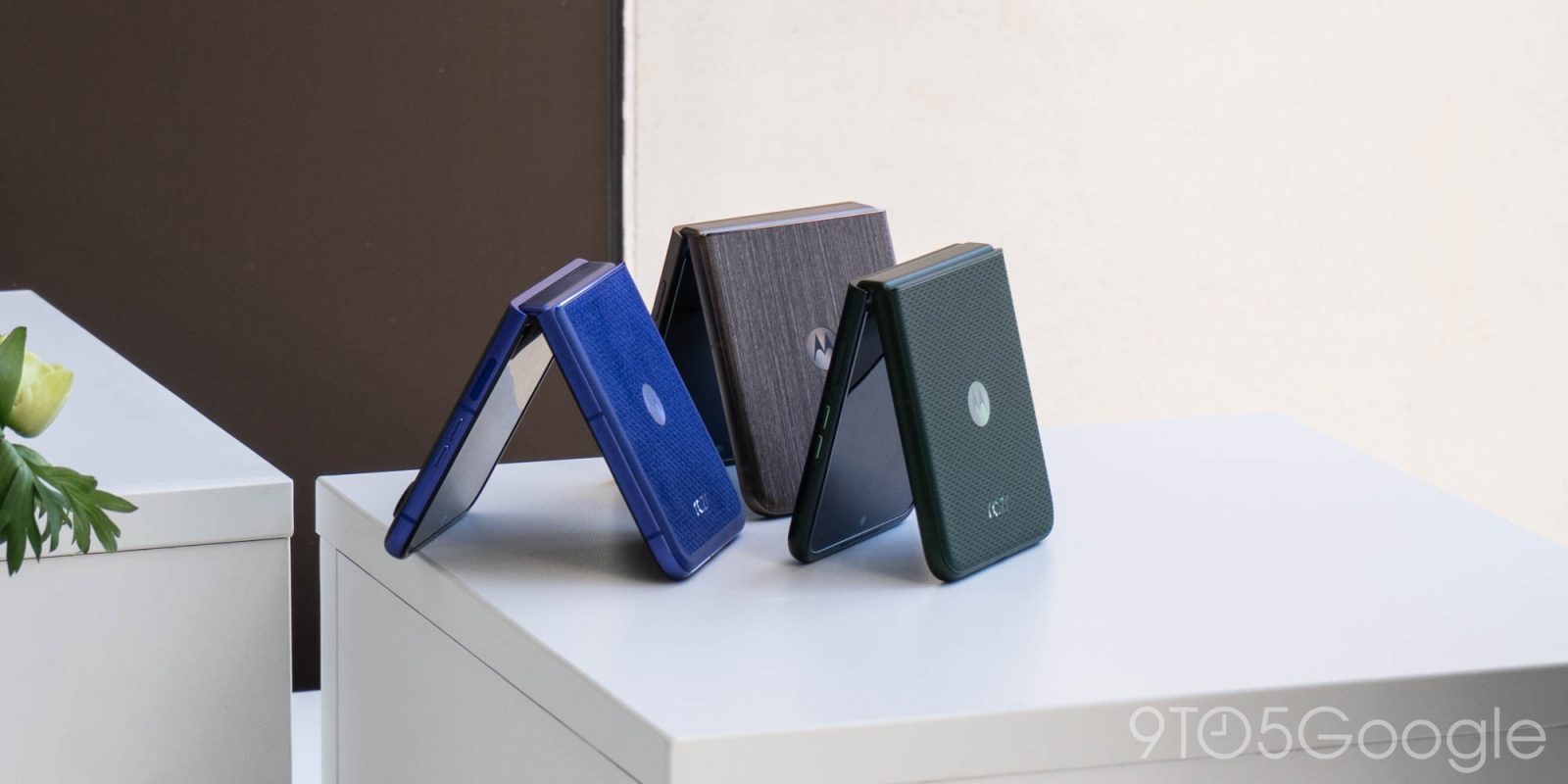
On the bright side, Motorola has introduced fresh color options for 2026: a vibrant Peach Fuzz for the standard Razr, a deep Midnight Blue for the Razr+, and a brushed Silver Quartz finish for the Razr Ultra. The phones also weigh slightly less — about 5 grams lighter per model — thanks to a redesigned internal chassis. It's a negligible difference, but if you're particular about weight, every gram helps. The build quality remains premium with an aluminum frame and Gorilla Glass Victus 2.
8. Should You Buy a 2026 Razr or Hunt for a 2025 Deal?
Given the minimal upgrades, the smart play is to look for discounts on the 2025 Razr models. They offer the same design, similar performance, excellent cameras, and identical battery life at a lower price. The 2026 models are only worth it if you absolutely need the latest processor or love one of the new colors. Otherwise, save your money. Motorola's incremental update is a clear sign that the clamshell foldable market is maturing — and that's actually a good thing for consumers who don't need to upgrade every year.
Conclusion: Motorola's 2026 Razr lineup is a classic mid-cycle refresh: tiny tweaks, bigger prices. The phones remain excellent foldables, but if you already own a 2025 model, there's no compelling reason to switch. For first-time foldable buyers, the 2026 phones are fine, but hunting for a deal on the 2025 series will get you nearly the same experience for less money. Ultimately, Motorola played it safe — and for a mature product line, that's not a bad thing.