10 Surprising Insights from the James Webb Telescope's Epic Cosmic Web Map
In a landmark achievement, astronomers leveraging the James Webb Space Telescope (JWST) have unveiled the most comprehensive map of the universe's hidden megastructures—the cosmic web. This staggering network of filaments, gas, and dark matter spans billions of light-years, holding the secrets of galaxy formation and the evolution of the cosmos. Here are 10 things you need to know about this groundbreaking map.
1. What Exactly Is the Cosmic Web?
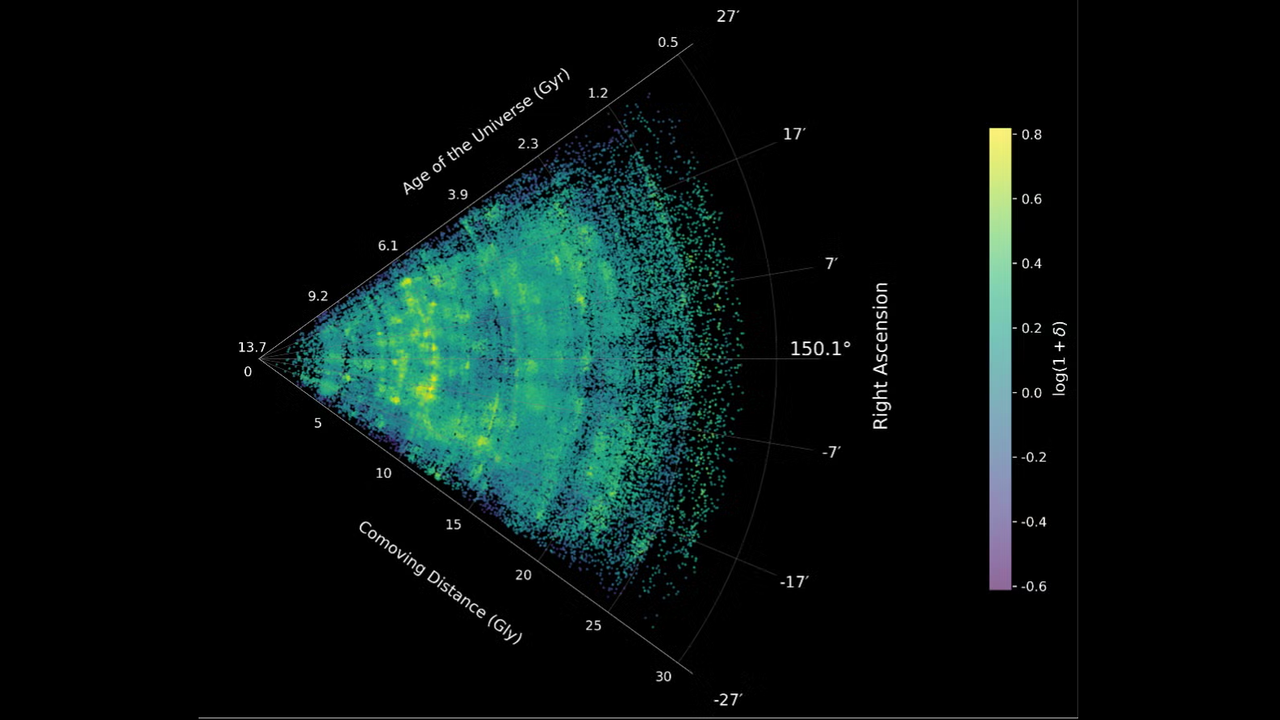
The cosmic web is the universe's large-scale structure—a vast, interconnected network of filaments composed of dark matter, gas, and galaxies. These filaments form the backbone of cosmic geography, connecting dense galaxy clusters with vast, near-empty voids. Think of it as the spider web of spacetime, where every thread holds clues to how matter clumped together after the Big Bang. This map reveals these threads in unprecedented detail, captured by JWST's deep infrared eye.
2. How the James Webb Telescope Achieved This Feat
JWST's extraordinary sensitivity and infrared capabilities allowed it to peer through cosmic dust and across immense distances. By observing faint light from distant galaxies and intergalactic gas, astronomers painstakingly traced the faint glow of hydrogen along the web's filaments. The map covers a staggering area of the sky—hundreds of thousands of galaxies—making it the largest and most detailed ever produced. No previous observatory could resolve these faint structures so clearly.
3. 'Truly Significant' – The Scale of This Discovery
Lead researchers describe the map as "truly significant" because it confirms theories about structure formation with real data. For decades, simulations predicted a web-like distribution of matter, but direct observation was limited. This JWST map validates those models while revealing unexpected features, such as unusually dense knots and bridges between clusters. It reshapes our understanding of how the universe organized itself over 13.8 billion years.
4. Unmasking Hidden Megastructures
The so-called "hidden megastructures" are immense concentrations of matter—galaxy clusters, filaments, and walls—that were too faint or obscured for previous telescopes. JWST's infrared view cuts through dust, exposing these cosmic giants. Some are over a billion light-years long, containing thousands of galaxies. They act as gravitational lenses, bending light from even more distant objects, allowing astronomers to study the early universe in new ways.
5. Dark Matter: The Invisible Scaffold
Dark matter makes up about 85% of the universe's mass, yet it remains invisible. The cosmic web map reveals its distribution indirectly: dark matter's gravity pulls gas and galaxies into filaments, shaping the web. By mapping the positions of galaxies and gas, astronomers infer the underlying dark matter structure. This map provides the best-yet observational constraints on dark matter's role in cosmic evolution, testing models of cold dark matter.
6. Galaxy Formation in the Web's Strands
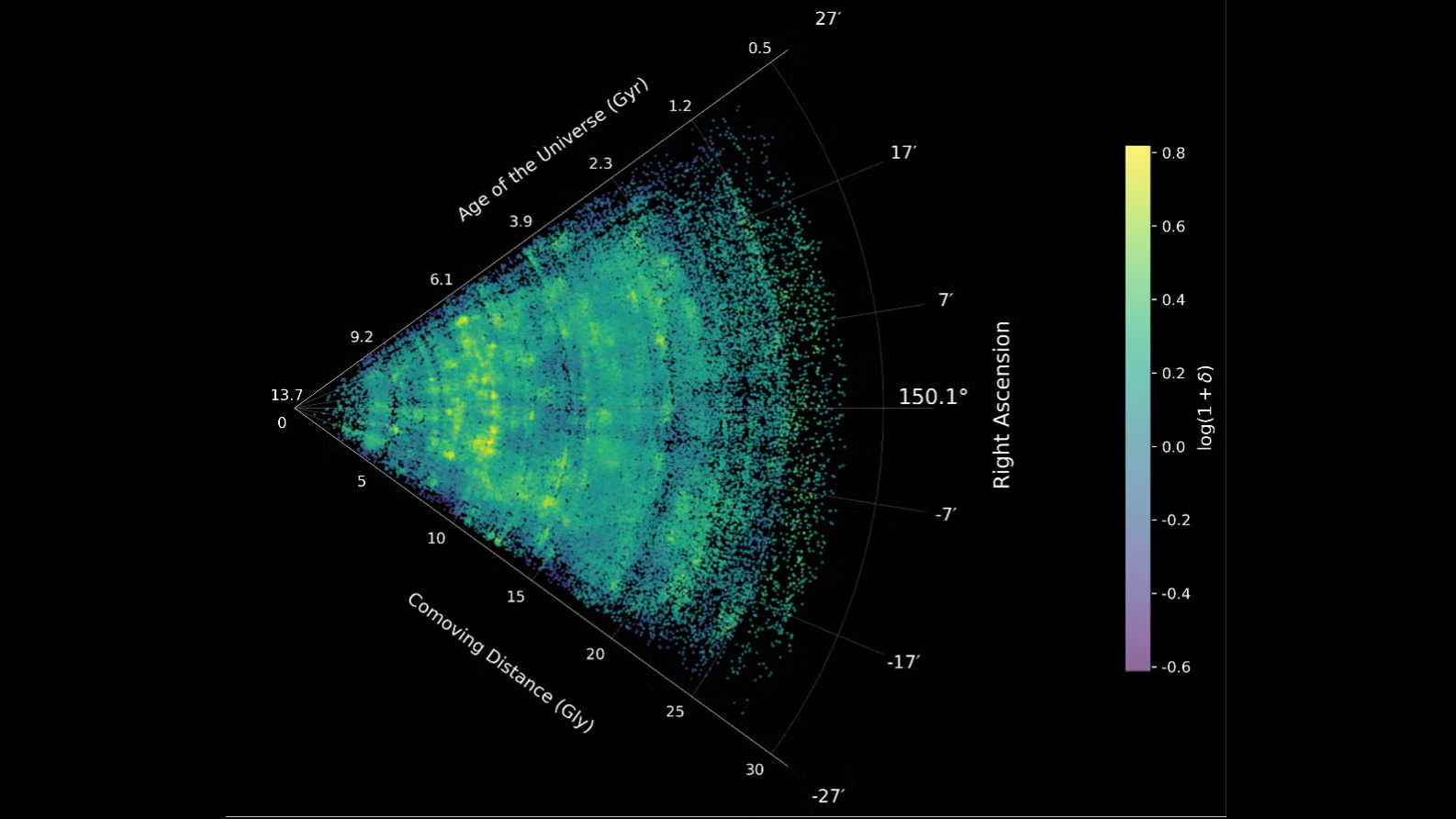
Galaxies form and evolve along the cosmic web's filaments. Gas flows along these threads, feeding star formation in galaxies at nodes. The map shows how galaxies cluster in dense regions while others drift through voids, isolated. This detailed view helps explain why some galaxies are massive and star-rich while others are quenched and passive. It also reveals how galaxy mergers are more common in the web's intersection points.
7. A Quantum Leap Over Previous Maps
Before JWST, the most detailed maps came from the Hubble Space Telescope and ground-based surveys like the Sloan Digital Sky Survey. Those covered smaller areas or lower resolution. This new map is both larger (by area) and deeper (by redshift), capturing galaxies from when the universe was only a few billion years old. It's like upgrading from a vague sketch to a high-resolution photograph, revealing the web's intricate lacework.
8. Technical Marvels Behind the Survey
The map required JWST to observe thousands of fields over months, using its Near-Infrared Camera (NIRCam) and Near-Infrared Spectrograph (NIRSpec). Advanced algorithms stitched these observations into a seamless mosaic. Teams employed machine learning to identify dim filaments against the cosmic infrared background. The result is a public dataset that will fuel decades of research, from galaxy evolution to cosmology.
9. Unexpected Surprises in the Data
Even as the map confirms many predictions, it also throws up puzzles. Astronomers found filamentary structures that are much denser than expected, possibly indicating early over-dense regions. Some bridges between clusters appear to be devoid of galaxies but rich in hot gas—challenging simple accretion models. These surprises suggest that the cosmic web is more dynamic and complex than simulations suggest.
10. What Comes Next for Cosmic Web Studies
This map is just the beginning. With JWST continuing operations, astronomers plan deeper observations to trace the web back to the first billion years. Combined with the European Space Agency's Euclid mission and the future Nancy Grace Roman Telescope, we'll soon have a three-dimensional view of the cosmic web across all epochs. The ultimate goal is to map the entire observable universe's large-scale structure—a true atlas of everything.
Conclusion
The James Webb Space Telescope's new map of the cosmic web is more than a pretty picture; it's a fundamental tool for testing cosmology. By revealing hidden megastructures and dark matter's scaffold, it brings us closer to understanding how our universe evolved from a smooth soup to the rich tapestry we see today. As data flows in, astronomers eagerly anticipate the next secrets the web will unveil.