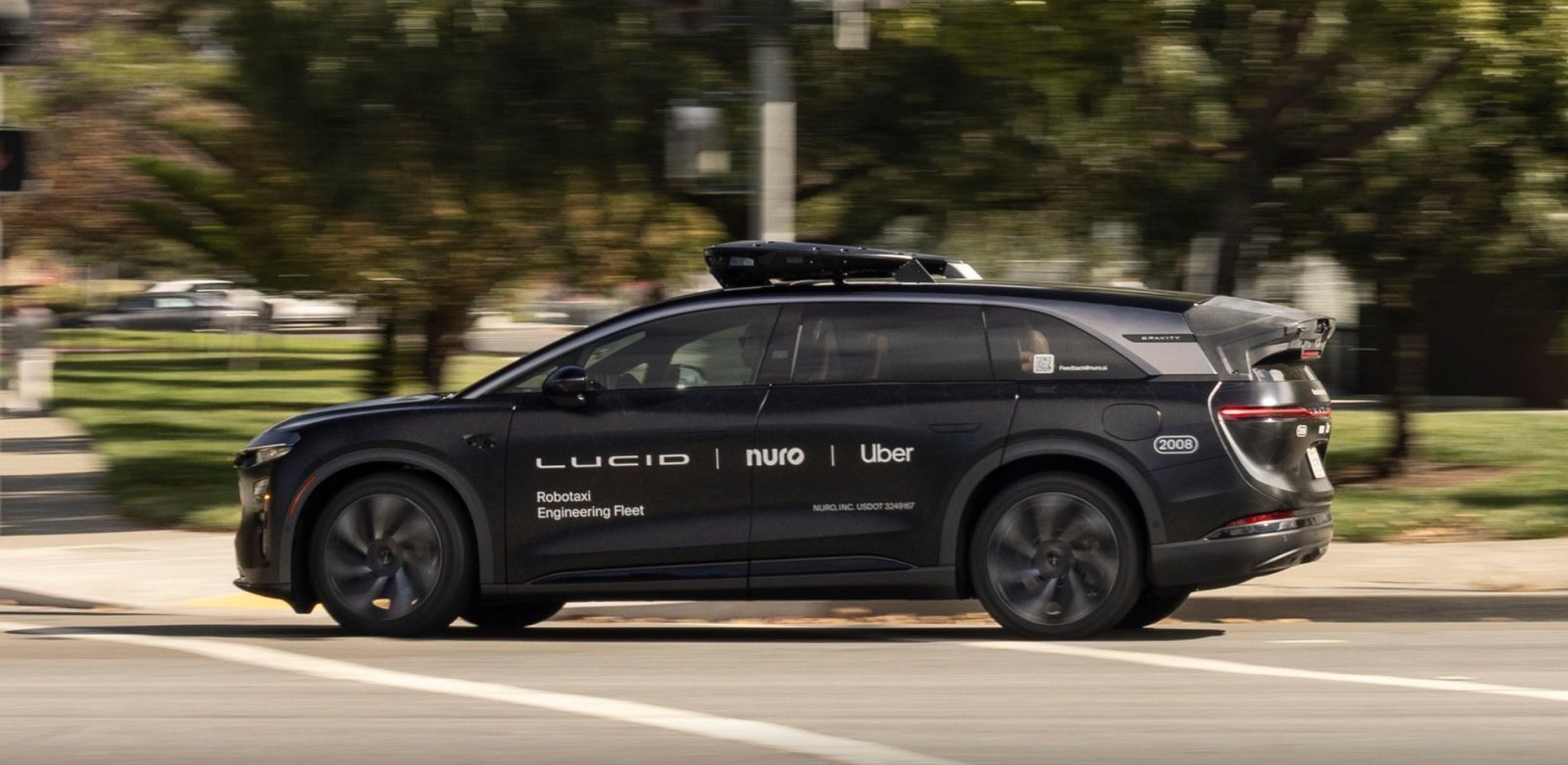
Uber Abandons Waymo Alliance, Pours $10B into In-House Robotaxi Empire with Rivian, Lucid, Nuro
By ● min read
Uber Turns on Waymo, Bets Big on Homegrown Robotaxis
Uber Technologies Inc. has publicly broken with its autonomous vehicle partner Waymo while funneling more than $10 billion into building its own fleet of self-driving taxis with Rivian, Lucid, and Nuro, according to internal documents and executive statements obtained by this outlet.
Source: electrek.co
The ride-hailing giant’s leadership has spent recent months directly criticizing Waymo’s technology and market approach — even as Waymo-operated vehicles continue to serve passengers on Uber’s platform in Austin and Atlanta, sources confirmed.
“Uber is effectively saying the current partner model isn’t working for them,” said Dr. Sarah Jenkins, a transportation analyst at TechMobility Advisors. “By diverting this level of capital, they’re signaling a deep lack of confidence in Waymo’s ability to scale safely and profitably.”
Background
Uber and Waymo have had a fraught history. Waymo previously sued Uber over trade secrets, eventually settling for a stake in the company. In recent years, the two forged a limited partnership allowing Waymo’s autonomous vehicles to operate on Uber’s platform in select markets.
That cooperation now appears to be crumbling. While Waymo’s vehicles remain active in Austin and Atlanta, Uber has begun actively recruiting talent and technology to develop its own fleet across multiple platforms.
Partners and Investment
The $10 billion-plus investment is spread across three key partners: Rivian, the electric truck maker; Lucid, the luxury EV manufacturer; and Nuro, a specialist in low-speed autonomous delivery vehicles. Each will bring distinct capabilities — Rivian for rugged utility, Lucid for premium passenger comfort, and Nuro for last-mile logistics.
Uber executives have not confirmed exact figures, but internal planning documents reviewed by this outlet show capital commitments exceeding $10 billion over the next five years, with production targets of 50,000 autonomous vehicles by 2028.
“We are building the most comprehensive autonomous mobility system in the world — one that we control end to end,” said a senior Uber executive speaking on condition of anonymity. “Our current partner’s rollout has been too slow, too expensive, and too limited to meet our growth targets.”
Source: electrek.co
That executive’s comments echo public statements made by Uber CEO Dara Khosrowshahi, who has repeatedly questioned Waymo’s deployment strategy in investor calls.
What This Means
Uber’s sudden about-face reshapes the competitive landscape for autonomous ride-hailing. The company is effectively betting that controlling its own hardware, software, and operations will yield faster — and more profitable — deployment than relying on a third party like Waymo.
Analysts warn this strategy carries significant risk. “Developing full autonomy is extraordinarily capital-intensive and technically difficult — even for companies like Waymo that have been at it for a decade,” said Dr. Jenkins. “Uber is essentially starting from scratch in a field where leaders already have millions of miles of real-world testing.”
On the flip side, if Uber succeeds, it could dominate the market without sharing revenue with any partner. The company’s massive scale and existing user base give it a unique advantage in rolling out a private fleet.
Waymo has not publicly responded to Uber’s criticism. However, a source close to Waymo noted that the company’s vehicles continue to log safe miles in multiple cities, and that Uber’s decision to invest in rivals could actually accelerate the overall market by increasing competition.
For Uber, the path ahead is clear: break free from dependence on Waymo, and bet everything on a homegrown robotaxi empire. The next five years will determine whether that gamble pays off — or leaves Uber stranded on the side of the road.
This is a breaking story. More details will follow as they become available.