Xpeng VLA 2.0 Autonomous Driving: Is Tesla’s Lead Finally Over?
Xpeng’s latest VLA 2.0 system marks a significant leap in consumer autonomous driving technology. In a recent 40-minute test drive through Beijing’s notoriously chaotic traffic, the system required zero driver interventions—a feat previously associated only with Tesla’s Full Self-Driving (FSD) beta. This Q&A breaks down what VLA 2.0 is, how it performed, and what it means for the future of self-driving cars.
What is Xpeng VLA 2.0, and how does it work?
Xpeng VLA 2.0 stands for “Vision-Language-Action,” an advanced end-to-end autonomous driving system that combines camera inputs with natural language understanding. Unlike traditional rule-based systems, VLA 2.0 uses a large neural network trained on millions of miles of real-world driving data, allowing it to interpret complex traffic scenes—like jaywalking pedestrians or erratic taxis—without relying on high-definition maps. The system processes visual cues (traffic signs, lane markings, obstacles) and translates them into smooth, human-like driving actions. It also integrates a voice assistant that can accept natural-language commands (e.g., “park near the entrance”) and adjust the driving plan accordingly. This sensor-fusion-light approach keeps hardware costs low while achieving performance that rivals costly lidar-based setups. Xpeng claims the system can handle urban, suburban, and highway driving with minimal disengagements, as demonstrated in the latest test.
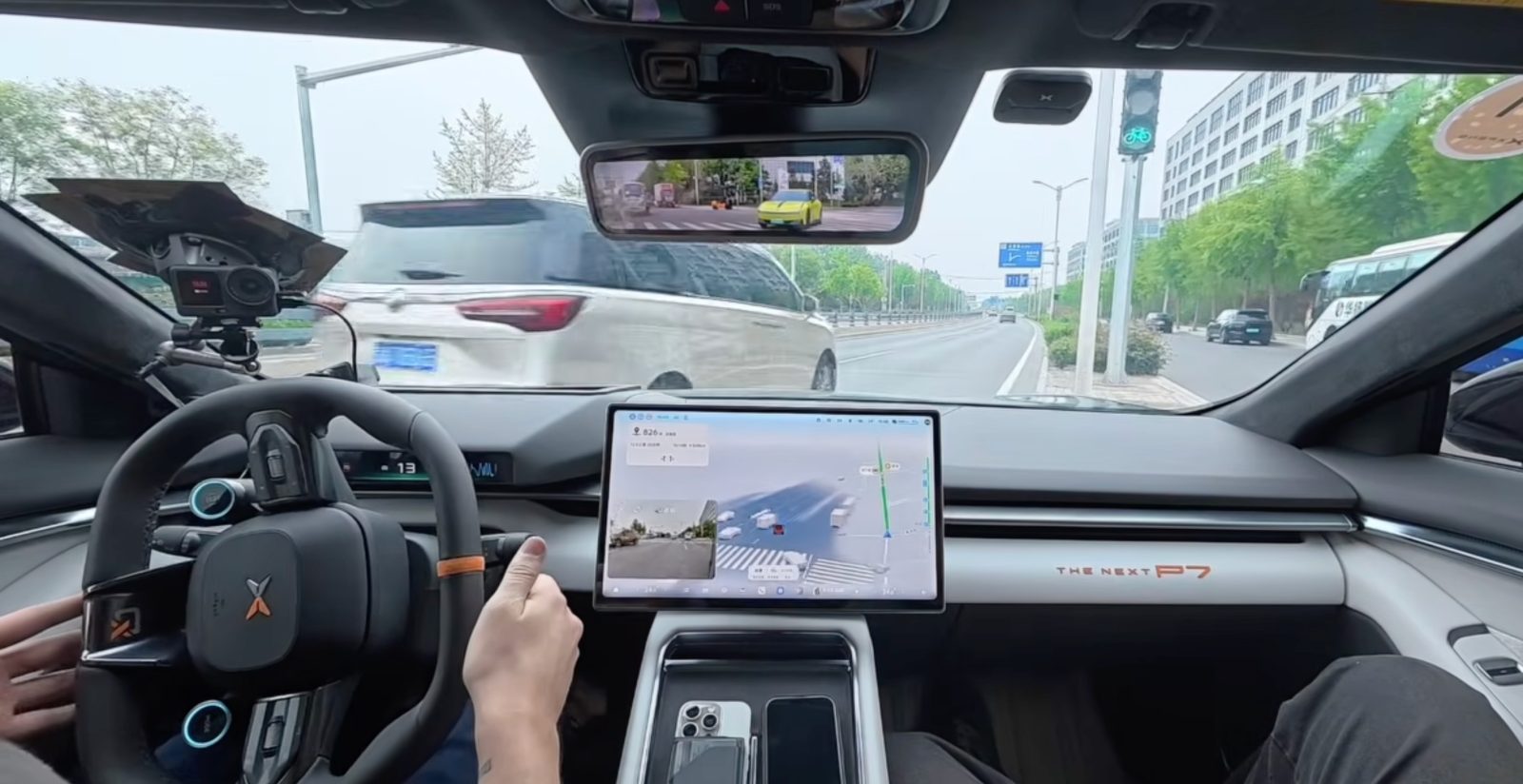
How did the Beijing test drive actually go?
During a 40-minute test drive through central Beijing, the Xpeng VLA 2.0 system navigated one of the world’s most aggressive driving environments entirely without human intervention. The route included heavy traffic, narrow lanes, sudden cut-ins, and unprotected left turns—scenarios that often force other ADAS systems to request takeover. The car smoothly accelerated and braked, negotiated tight merges, and even recognized a temporary construction zone, rerouting without hesitation. According to the test driver (the article’s author), there was never a moment of panic or a need to grab the wheel. The system’s decision-making felt natural, almost like an experienced local driver. This is a dramatic improvement over earlier Xpeng versions, which still required occasional corrections. The test suggests that the gap between Chinese and American autonomous driving technology is shrinking fast.
How does VLA 2.0 compare to Tesla’s Full Self-Driving?
Tesla’s FSD has long been the benchmark in consumer autonomous driving, but Xpeng VLA 2.0 now matches or outperforms it in several key areas. In the Beijing test, VLA 2.0 handled heavy urban traffic without disengagements—something FSD has struggled with in complex Chinese cities. Tesla relies heavily on its “pure vision” approach and a vast fleet of vehicles gathering data, but Xpeng has trained its network specifically on Chinese driving habits and chaotic road conditions. Additionally, VLA 2.0 includes a natural language interface that lets passengers request route changes or parking maneuvers conversationally, a feature Tesla currently lacks. However, Tesla still leads in highway summon and navigate-on-autopilot features, and its over-the-air update infrastructure is more mature. The takeaway: Tesla is no longer alone at the top. Xpeng has proven that a Chinese automaker can deliver comparable, and in some ways superior, self-driving capability.
What makes Beijing traffic so challenging for autonomous systems?
Beijing’s traffic is notoriously unpredictable. Drivers frequently change lanes without signaling, scooters weave between cars, and pedestrians cross anywhere. Traffic signals are sometimes ignored, and “informal” roundabouts create constant negotiation. For an autonomous system, this requires not just accurate perception but aggressive yet safe decision-making—what engineers call “social navigation.” Traditional ADAS systems often fail here because they’re programmed for orderly, rule-following behavior. Xpeng VLA 2.0, trained on massive amounts of local data, learns to predict and react to these habits. It anticipates that a taxi might cut in, or a delivery scooter might dash across an intersection. This adaptation is critical for any automaker aiming for true Level 4 autonomy outside carefully mapped zones. The Beijing test proves the system can handle the worst—meaning it can handle almost any real-world urban environment.

What’s next for Xpeng’s autonomous driving technology?
Xpeng plans to roll out VLA 2.0 to its existing vehicle lineup via over-the-air updates starting in early 2024. Future versions aim to eliminate the need for any driver attention, progressing from current L2+ to true L4 autonomy. The company is also expanding its test fleet to multiple Chinese cities and exploring partnerships for European and Southeast Asian markets. Key upcoming features include “co-pilot” voice interaction that can execute complex multi-step commands, and improved handling of unpaved roads and parking garages. Xpeng has also teased a “personalized driving style” setting that learns the owner’s preferences over time. With each update, the system collects more edge cases and sharpens its neural network. The ultimate goal is a system that drives as well as—or better than—any human driver, without geographical limitations. Competitors like Tesla, Huawei, and NIO are racing toward the same target, but Xpeng’s rapid iteration gives it a strong foothold.
Should consumers buy a Xpeng car specifically for its self-driving capabilities?
If you live in China or a market where Xpeng vehicles are sold, VLA 2.0 makes the brand a compelling choice—especially for tech enthusiasts who want cutting-edge autonomy. The system already offers hands-free operation in many urban scenarios, and upcoming updates promise to expand its capabilities. However, several factors should be considered: first, regulations in many countries still require drivers to remain attentive, so L4 benefits are not yet fully realized. Second, Xpeng’s current model lineup is limited to EVs, and not all trims include VLA 2.0 hardware. Third, the system’s performance outside of China is unproven, as training data is primarily Chinese. That said, Xpeng offers a “subscription” model where you pay monthly for the autonomous feature—making it accessible without a huge upfront cost. For early adopters, the value is clear: you get Tesla-competitive self-driving at a lower price point. For risk-averse buyers, waiting for more regulatory clarity and broader testing might be wise.