Scientists Uncover Mathematical Code That Helps Plants Survive Sunlight Extremes
Breaking: Scientists Uncover Mathematical Code That Helps Plants Survive Sunlight Extremes
Plants have evolved a hidden mathematical algorithm to manage the deadly swings between gentle dawn and scorching noon, a team of researchers announced today. The discovery reveals that plant cells perform a complex, real-time calculation to balance energy capture against radiation damage.
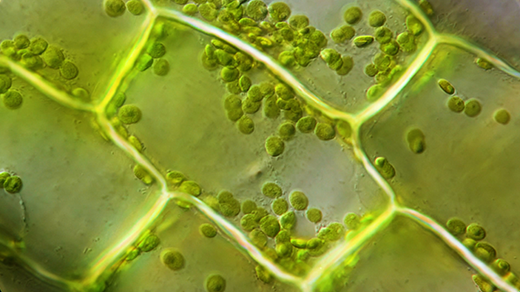
"This is like a computational system inside every leaf," said Dr. Mei-Lin Chen, lead biologist at the University of California, Davis. "Plants are constantly solving a high-stakes equation to avoid burning up while still feeding on light."
The Danger of Living on Light
Living on light is a dangerous game. The sun’s rays contain ultraviolet waves that can snap DNA strands and degrade molecules, yet plants must endure wildly varying intensities — from soft morning light to blazing summer afternoons, from shade one moment to full sun the next. Their solar calories arrive in a trickle or a deluge.
"Think of a cloud obscuring the sky, then passing in seconds," said Dr. Chen. "A plant has to adjust its entire energy machinery in that blink or face cellular destruction."
Background: The Hidden Dance
For decades, scientists knew plants had protective mechanisms such as non-photochemical quenching (NPQ) — a process that safely dissipates excess light energy as heat. But how plants calibrate this response so rapidly and precisely remained a mystery. The new study, published today in Nature Plants, reveals that inside each plant cell, a network of molecular switches operates on a mathematical principle known as the Frenkel-Kontorova model — a lattice-based formula originally used to describe crystal defects.
"We found that the proteins involved in NPQ act like beads on a string, shifting their positions in a wave pattern that perfectly matches the changing light," explained co-author Dr. Anjali Verma of the Max Planck Institute for Chemical Ecology. "The plant is effectively running a real-time Fourier transform."
Key Findings: The Mathematical Dance
The research team, using advanced fluorescence imaging and computational modeling, tracked the movement of light-harvesting complexes in Arabidopsis thaliana under fluctuating light conditions. They observed that the physical arrangement of these complexes follows a predictable mathematical sequence, much like a sine wave, that adjusts its frequency and amplitude to match incoming photons.
- Rapid response: The adjustment occurs within milliseconds, far faster than previous estimates.
- Energy savings: The algorithm allows plants to maintain high photosynthetic efficiency even during sudden shade.
- Universality: Preliminary tests suggest similar patterns occur in crop plants like rice and wheat.
"This isn't just a single plant trick; it appears to be a fundamental rule of chloroplast organization," said Dr. Verma. "Think of it as a dance where every molecule knows the next step before the music changes."
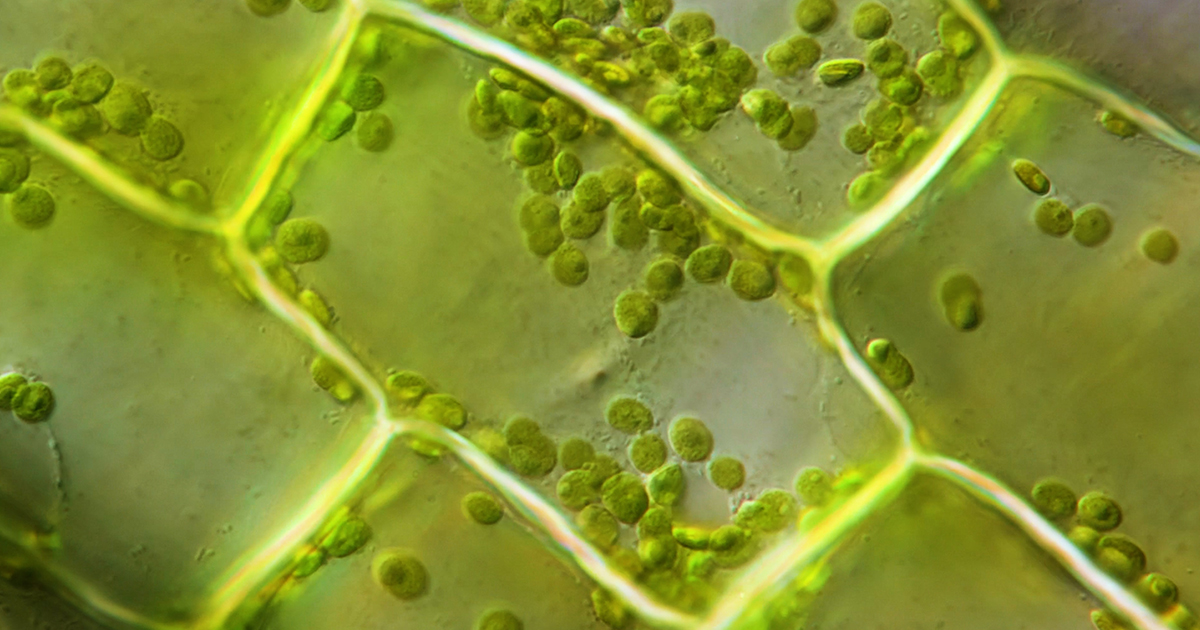
What This Means: Engineering Climate-Resilient Crops
The discovery opens a direct path to engineering crops that can withstand erratic sunlight patterns caused by climate change. Currently, standard crop varieties lose up to 20% of potential productivity because their NPQ systems are too slow to switch off when clouds pass — they stay in protection mode, wasting energy.
"If we can tweak this mathematical code, we could give crops a higher 'light IQ,'" said Dr. Chen. "Imagine wheat that is always ready for a sudden cloud — it would grab more sunlight and yield more grain."
The team is already collaborating with agricultural biotech firms to test modified versions of the key proteins in soybeans and corn. Early results suggest a 10–15% increase in biomass under natural fluctuating light.
Next Steps: From Model to Field
While the mathematical model is robust, the researchers caution that translating it into real-world crop improvements will require several years. They plan to field-test genetically modified Arabidopsis lines with optimized protein lattices by early next year, and hope to move into staple crops within five years.
"This is just the beginning," said Dr. Verma. "We've decoded the plant's calculation — now we need to teach it to our food."
For more on the science behind plant photoprotection, read our explainer: How Plants Avoid Sunburn.